The Impact of Lighting on Paint Colors
Why the color you fell in love with at the store looks completely different in your living room.
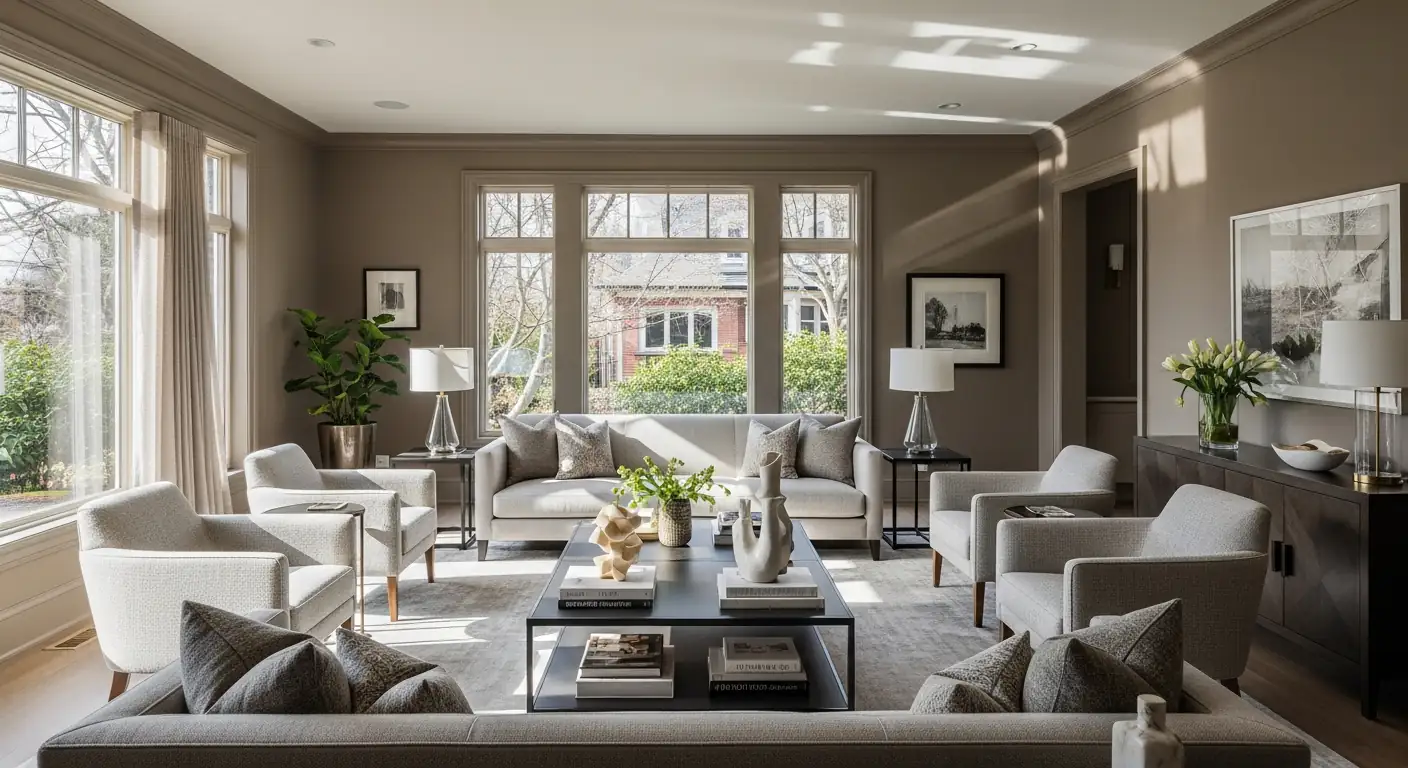
It is a common and frustrating scenario: you spend hours agonizing over paint swatches under the bright fluorescent lights of a hardware store, finally selecting the perfect, sophisticated gray. You bring it home, paint the walls, and suddenly, your elegant gray looks undeniably purple. This phenomenon is not a mistake in the paint mixing; it is a demonstration of the profound impact lighting has on color perception.
Color is not an inherent property of an object; it is the way our eyes interpret the light reflecting off that object. Therefore, as the light source changes, the perceived color inevitably changes with it. Understanding this relationship is crucial for achieving the desired aesthetic in your home.
Natural Light Variations
As discussed in our guide to white paints, the direction of natural light significantly alters color. Northern light is cool and indirect, adding a blueish cast that can make colors appear darker and duller. Warm colors can help counteract this chill.
Southern light is intense and warm, amplifying warm tones and sometimes washing out lighter colors. Eastern light is warm in the morning and cool in the afternoon, while western light provides a warm, golden glow in the evening. A color that looks perfect at 10 AM may look entirely different at 4 PM.
Artificial Lighting: The Kelvin Scale
Once the sun goes down, artificial lighting takes over, and it plays an equally critical role. The 'color temperature' of a light bulb is measured in Kelvins (K).
Traditional incandescent bulbs and warm white LEDs (around 2700K) emit a yellowish light. They enhance warm colors like reds, yellows, and warm neutrals, but they can make cool colors like blues and grays appear muddy or slightly green.
Cool white or 'daylight' bulbs (4000K - 5000K) emit a bluish light. They make cool colors pop and appear crisp, but they can make warm colors look harsh and unflattering.
Metamerism
The phenomenon where two colors appear to match under one light source but look different under another is called metamerism. This is why it is absolutely vital to test your paint colors in the room where they will be applied, under both the natural light of day and the specific artificial lighting you use at night.
At Pine St. Painting, we highly recommend painting large sample boards and observing them over a 24-hour period before making a final commitment. This simple step eliminates surprises and ensures you love the color in every light.

Written by
Jacob, Pine St. Painting
Published